Trusted Veterinary Care for Your Large Animals & Farm Calls!

A hernia in a cat can develop when tissue or an internal organ pushes through a weakened area of muscle or connective tissue. Some hernias appear as small, soft swellings, while others may cause discomfort or interfere with normal organ function. Although certain hernias can be monitored, others require surgical repair to prevent complications and protect a cat’s health.
Understanding how veterinarians diagnose hernias and determine the right treatment can help cat owners make informed decisions. Cat surgery may be recommended depending on the hernia’s location, size, severity, and the tissues involved. At Wewoka Animal Hospital in Wewoka, understanding the evaluation process can help pet owners recognize concerning changes and seek appropriate veterinary care.
What Is a Hernia in Cats?
A hernia occurs when tissue moves through an opening or weak spot in the muscle or connective tissue that normally holds it in place. The displaced tissue may include fat, intestines, or other abdominal structures, depending on the hernia’s location.
Some cats are born with a hernia because the abdominal wall or another structure did not close properly during development. Other hernias develop after an injury, significant strain, or previous surgical incision. The condition can affect kittens as well as adult and senior cats.
A hernia does not always cause obvious discomfort. However, if an organ becomes trapped in the opening, its blood supply may be restricted. This can lead to tissue damage and serious complications. Veterinary assessment helps determine whether the hernia can be monitored or requires surgical treatment.
Common Types of Hernias in Cats
Identifying the type of hernia is an important first step in planning treatment. Veterinarians evaluate the affected area and determine which tissues may be involved.
Umbilical Hernias
Umbilical hernias develop near the belly button, where the umbilical opening did not close completely after birth. They often appear as a soft bulge on the abdomen. Small hernias may contain only fat, while larger openings can allow abdominal contents to protrude.
Some small umbilical hernias may be monitored, but surgical repair may be recommended if the opening is significant or contains tissue that could become trapped.
Inguinal Hernias
Inguinal hernias occur near the groin, where tissue passes through a weakened area of the abdominal wall. Depending on the size of the opening, fat, intestines, or other structures may enter the space.
Because the contents can become trapped, veterinarians carefully assess the hernia’s size, tenderness, and reducibility. Surgery may be necessary to return the affected tissue to its proper position and close the opening.
Diaphragmatic Hernias
The diaphragm separates the chest from the abdomen. A diaphragmatic hernia occurs when an opening allows abdominal organs to move into the chest cavity. This may happen after trauma or because of a congenital defect.
When abdominal organs enter the chest, they can interfere with lung expansion and breathing. Diagnosis and treatment may involve advanced imaging, stabilization, and carefully planned surgery.
Incisional Hernias
An incisional hernia develops at the site of a previous abdominal operation when the surgical closure does not heal as intended or the underlying tissues separate. Owners may notice swelling near an old incision.
A veterinarian must determine whether the swelling represents a hernia, fluid accumulation, infection, or another postoperative issue before recommending treatment.
Signs That May Indicate a Hernia
The symptoms of a hernia depend on its location and severity. Some cats have a visible lump without other signs, while others experience pain or changes in normal behavior.
Possible signs include:
- A soft or firm swelling beneath the skin
- A bulge near the belly button, groin, or previous incision
- Tenderness when the affected area is touched
- Reduced appetite or vomiting
- Unusual hiding, restlessness, or reduced activity
- Abdominal discomfort or changes in posture
- Difficulty breathing in cats with certain chest-related hernias
A swelling should not automatically be assumed to be a hernia. Abscesses, tumors, fluid collections, and other conditions can produce similar changes.
Seek prompt veterinary assessment if you notice a new lump, especially if it becomes painful, firm, discolored, or suddenly larger. Breathing difficulty, repeated vomiting, severe pain, or sudden weakness requires immediate veterinary attention.
How Veterinarians Evaluate a Cat Hernia
Before recommending veterinary surgery, the veterinarian gathers information about the cat’s medical history, symptoms, and any possible injury. Owners may be asked when the swelling first appeared, whether it has changed, and whether the cat has undergone previous procedures.
During the physical examination, the veterinarian evaluates the location and size of the swelling, checks for tenderness, and assesses whether the protruding tissue can be gently returned through the opening. This is known as reducibility. Owners should not attempt to push a suspected hernia back into place themselves.
Diagnostic imaging may be recommended when the contents of the hernia are unclear or internal organs may be involved. X-rays can help evaluate certain internal abnormalities, while ultrasound can provide information about soft tissues and the structures within the hernia. More advanced imaging may be needed for complicated cases, particularly when the diaphragm or chest is affected.
Blood tests may also help assess the cat’s overall health and identify concerns that could influence anesthesia or recovery. These findings allow the veterinary team to develop a treatment plan suited to the individual patient.
When Is Cat Hernia Surgery Necessary?
The decision to perform cat surgery depends on whether the hernia poses a risk to the cat’s health and whether the affected tissues can remain safely in their normal position.
Surgery is commonly considered when a hernia is large, continues to grow, causes discomfort, or allows organs to protrude. It may also be necessary if tissue becomes trapped and cannot be returned to the abdominal cavity. A trapped hernia can compromise circulation and damage the affected organ.
Some congenital hernias are repaired while a cat is young, depending on their size and the risk of complications. In selected cases, repair may be coordinated with another planned procedure when medically appropriate.
Not every hernia requires immediate surgery. A small, uncomplicated hernia may be monitored under veterinary guidance. However, monitoring should follow a professional assessment rather than an assumption that the swelling is harmless.
How Veterinarians Plan the Surgical Procedure
A surgical plan considers the hernia’s location, the tissues involved, the cat’s age, and its general health. The veterinarian also evaluates whether the operation is straightforward or may require more extensive repair.
Before surgery, the team may recommend bloodwork or other tests to assess anesthetic risk. The cat’s current medications, previous medical conditions, and recent symptoms are also considered. Owners should provide a complete medication history and follow the veterinary team’s instructions about food and water before the procedure.
During hernia repair, the veterinarian carefully returns displaced tissue to its appropriate position when possible and closes the weakened opening. The method depends on the type of hernia and the condition of the surrounding tissue. Some complicated cases require additional procedures if an organ has been damaged.
Professional pet surgical services include more than the operation itself. Careful preparation, anesthesia monitoring, pain management, and postoperative assessment all contribute to a safer treatment process.
Recovery After Hernia Repair
Recovery depends on the type of hernia, the complexity of the repair, and the cat’s overall health. Following the discharge instructions helps protect the surgical site while tissues heal.
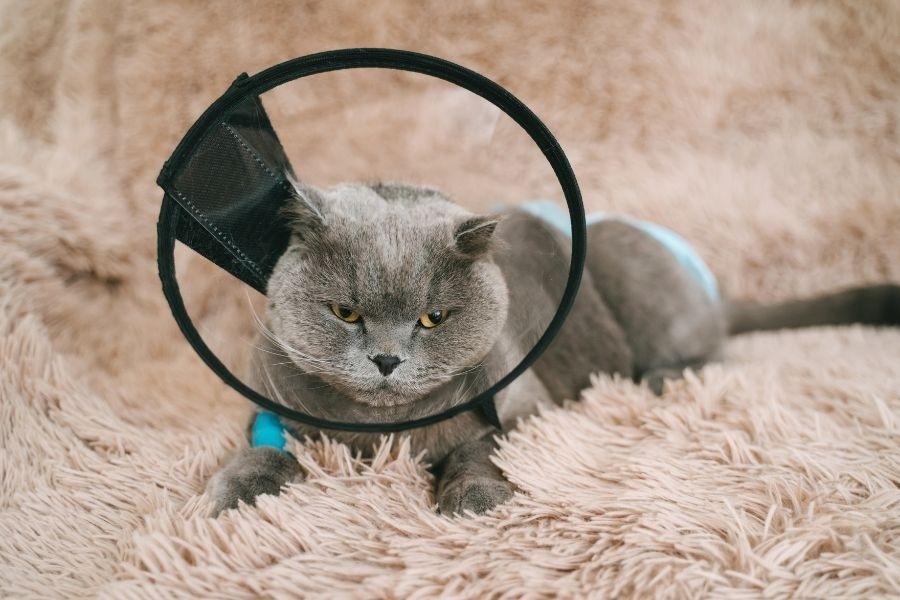
Keep your cat indoors and limit running, jumping, and vigorous play for the period recommended by the veterinarian. Provide a quiet resting area with easy access to food, water, and a litter box. Use a protective collar if advised to prevent licking or chewing at the incision.
Check the surgical site as instructed. Increasing redness, swelling, discharge, bleeding, or an opening in the incision should be reported to the veterinary team. Contact the veterinarian if your cat develops repeated vomiting, worsening pain, unusual weakness, or difficulty eating.
Give prescribed medication exactly as directed. Do not administer human pain relievers unless specifically prescribed by a veterinarian, as some can be toxic to cats. Attend recommended follow-up appointments so the veterinarian can assess healing and advise when normal activity may resume.
Schedule a Veterinary Consultation at Wewoka Animal Hospital
Not every lump indicates a hernia, and not every hernia requires the same treatment. A veterinary examination helps clarify the diagnosis and determine whether observation or surgical repair is appropriate.
If you notice swelling near your cat’s abdomen, groin, or a previous surgical incision, contact Wewoka Animal Hospital in Wewoka to arrange a consultation. Share any changes in appetite, activity, comfort, or breathing, along with details about when the swelling first appeared.
The veterinary team can evaluate your cat, recommend appropriate diagnostic tests, and explain available treatment options. Scheduling an appointment allows you to discuss your cat’s individual needs and understand the next steps in its care.
Frequently Asked Questions
Q1. Can a cat live with a hernia without surgery?
Ans: Some small, uncomplicated hernias may be monitored if a veterinarian determines that the risk of complications is low. Others require repair because organs or tissues may become trapped. The appropriate approach depends on the hernia’s location, size, and contents.
Q2. Is hernia surgery painful for cats?
Ans: Cats receive anesthesia during surgery, and veterinarians use appropriate pain management to support comfort during recovery. Some tenderness may occur afterward, but medication and activity restrictions help manage discomfort while the tissues heal.
Q3. How long does a cat need to recover after hernia surgery?
Ans: Recovery varies according to the type of hernia and the complexity of the procedure. Many cats need restricted activity for approximately 10 to 14 days, although complicated repairs may require longer. Follow the veterinarian’s specific instructions.
Q4. Can a hernia return after surgical repair?
Ans: Recurrence is possible, particularly if the repaired tissues do not heal properly or the original defect is complex. Following activity restrictions, protecting the incision, and attending follow-up examinations can help identify healing concerns early.
Q5. How can I tell whether my cat’s lump is a hernia?
Ans: A hernia may appear as a bulge near the abdomen, groin, or a previous incision, but other conditions can look similar. A veterinary examination, and sometimes imaging, is needed to establish the cause. Avoid pressing or manipulating the lump at home.